There has been an excellent turnout at United Feeds’ recent series of farmer meetings held in Ballymoney, Banbridge, Omagh and Enniskillen, with over 250 people attending. The events focused on a single theme: Preparing Your Dairy Business for 2026.
United Feeds Sales Director Alan Boyd said the strong attendances reflected the value farmers place on clear guidance during a period of market uncertainty.
“2025 has been a good year for dairy farmers in Northern Ireland with decent milk prices, a good milk to feed price ratio and favourable weather conditions” he noted. “But dairy markets have weakened through the end of 2025 and unfortunately the outlook for milk price in 2026 is significantly lower. These meetings were designed to help farmers assess their dairy businesses and plan ahead, and the turnout shows how important that support is.” Each meeting focussed on three key areas.
Financing Your Business
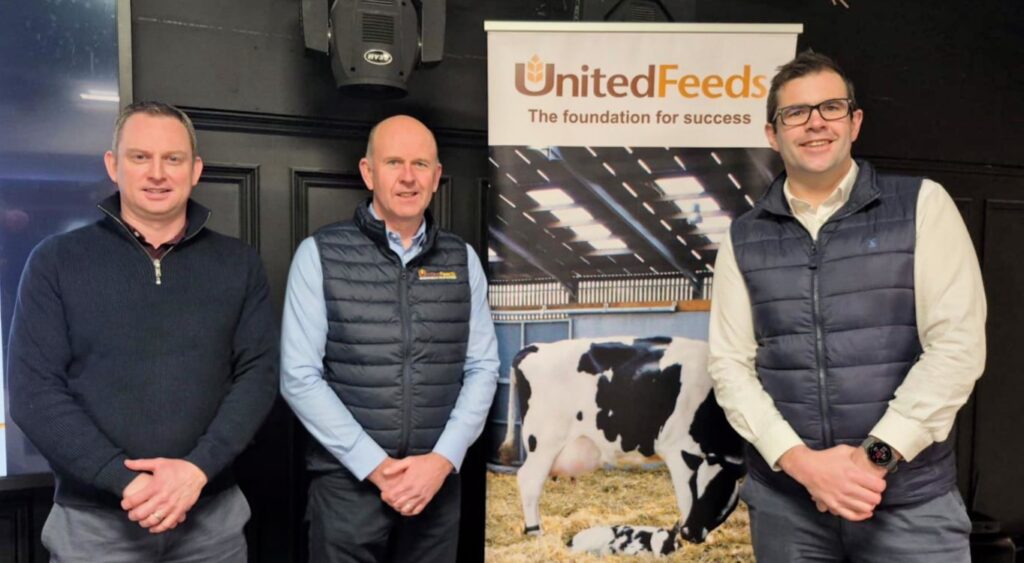
Ulster Bank business banking representatives spoke at the meetings. They focussed on the relatively strong position most dairy farm finances are in at the present time and offered some advice on how to deal with the predicted downturn in dairy farm incomes over the months ahead.
Farmers were advised to compile accurate cash flow projections for their businesses and where it was necessary to speak to their bank about what options were available to address any short comings in their cash flow projections. These may include drawing on reserves/ savings, moving to interest only repayments on loans, for a period, extending overdrafts, or amalgamating debt over a longer term.
Feeding Your Herd
Members of the United Feeds nutrition team focussed on the importance of feeding your herd right. They highlighted what we could learn from cow performance in 2025 and how this should inform decisions made around milking herd nutrition in the year ahead.
2025 saw significant increases in both milk yields and solids on NI dairy farms, driven by strong grass growth, high quality silage, favourable milk prices and an excellent milk‑to‑feed cost ratio.
“The performance achieved last year demonstrates the tremendous genetic potential of Northern Ireland’s dairy cows”.
Dairy Herd Management milk recording data shows average yields on recorded herds rose by 1.5 litres per cow per day from April to November compared with 2024, however most significantly alongside these large improvements in milk yield where increases to both milk butterfat and protein levels. Fertility also remained strong, supported by good cow health and body condition.
The United Feeds team highlighted that the principle of “energy in equals energy out” is the key driver in this improved dairy cow performance.
“Energy intake underpins milk yield, milk quality, fertility, body condition and overall cow health,” they explained. “As milk quality rises, so too does the cow’s energy requirement. If forage dry matter intake and quality drops, then concentrate levels must increase to maintain butterfat and protein levels.”
Maximising forage quality and intake remains the foundation of good dairy cow nutrition. This is the basis for delivering a consistent good quality diet that meets the cow’s energy requirements for milk output while allowing her to remain fertile, healthy and in a good body condition score.
Managing Your Herd
United Feeds Business Development Advisor Michael Verner used his presentation to invite the audience to take a virtual farm tour of their own farm.
He highlighted the first-class job many farmers do of managing their dairy businesses but encouraged the audience to consider where there was room for improvement or further gains on their own farm. This could be in any area of their dairy enterprise, whether it be managing dry cows, feeding calves, rearing heifers or manging the milking herd.
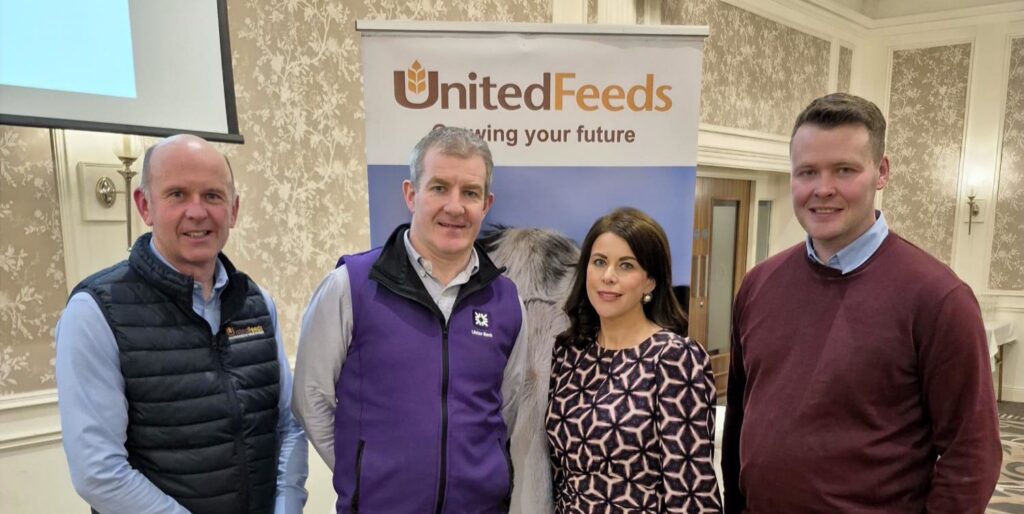
“Dry cows are always my first stop on any farm,” he said. “Body condition scoring and the feeding regime are the top priorities.”
He stressed the need for low‑potash silages for close‑up cows to reduce the risk of metabolic disorders such as milk fever. The need for adequate feed space, comfortable cubicles and good colostrum quality—easily checked with a refractometer—were also highlighted.
Farmers were urged to maintain close attention to young stock, noting that yearling heifers are often overlooked either side breeding. Modern black‑and‑white heifers should reach a target bulling weight of 370kg at 14–15 months.
Keeping heifers on distant conacre ground can lead to poor thrive and lighter calving weights. Rotational grazing for second‑year heifers and careful grassland management is critical to support consistent growth.
Across all age groups, a plentiful supply of clean, water is essential. Ideally 10% of a milking group should be able to drink at any one time, with demand peaking after milking. Regular trough cleaning is essential.
He also stressed the need for adequate feed space for milking cows—two feet per cow—and regular feed push‑ups to ensure cows are always fed to appetite.
High‑comfort cubicles, and enough of them, along with secure footing help minimise lameness, slips and falls, supporting both welfare and production.
United Feeds are here to help
Alan Boyd brought each meeting to a close by thanking everyone for attending and encouraging them to contact the United Feeds’ team of Ruminant Nutrition Advisors across Northern Ireland who are available to provide management advice and nutritional solutions that will help to drive dairy performance from your herd through milk yield, milk quality, fertility and animal health.

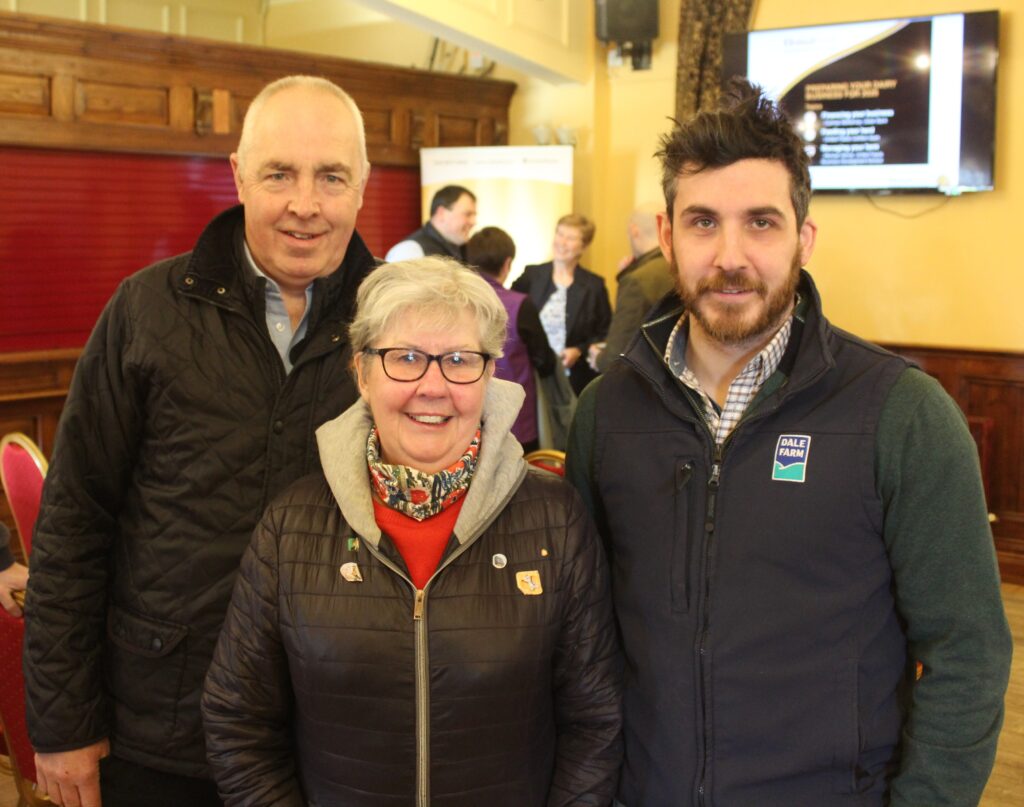
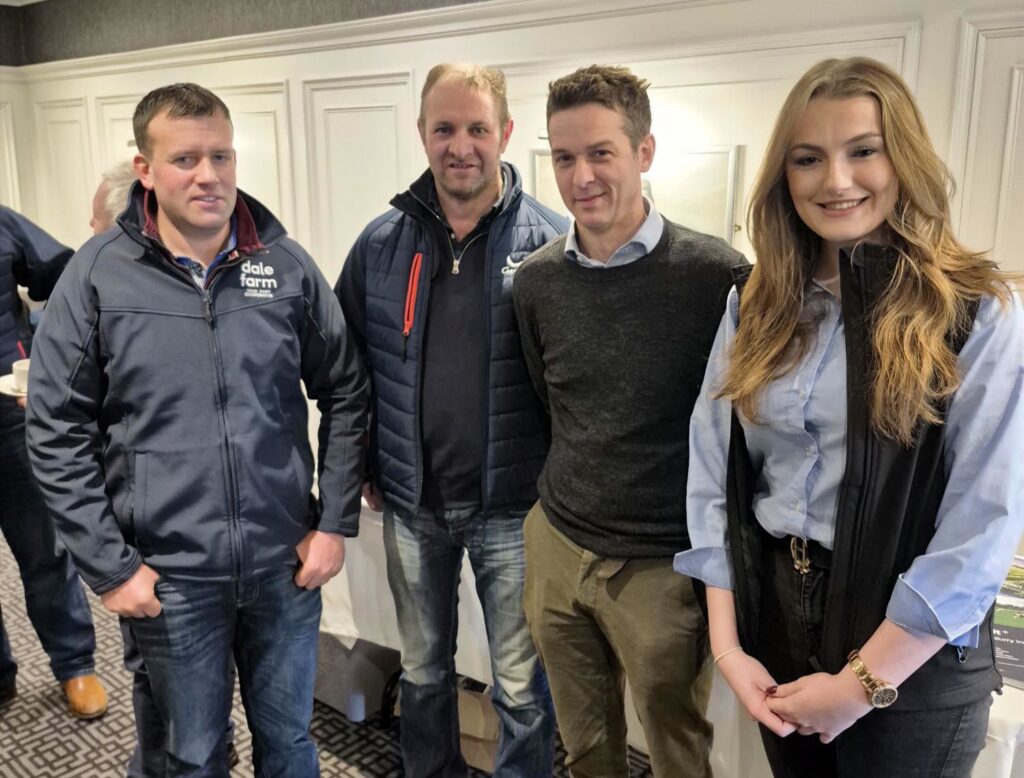
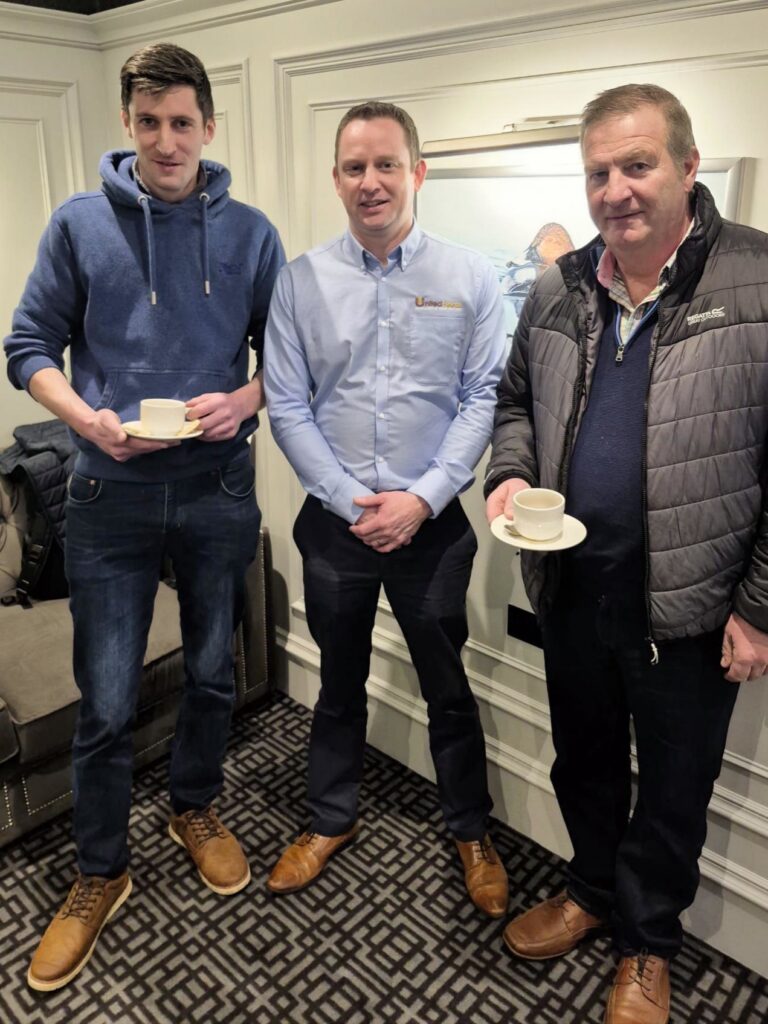
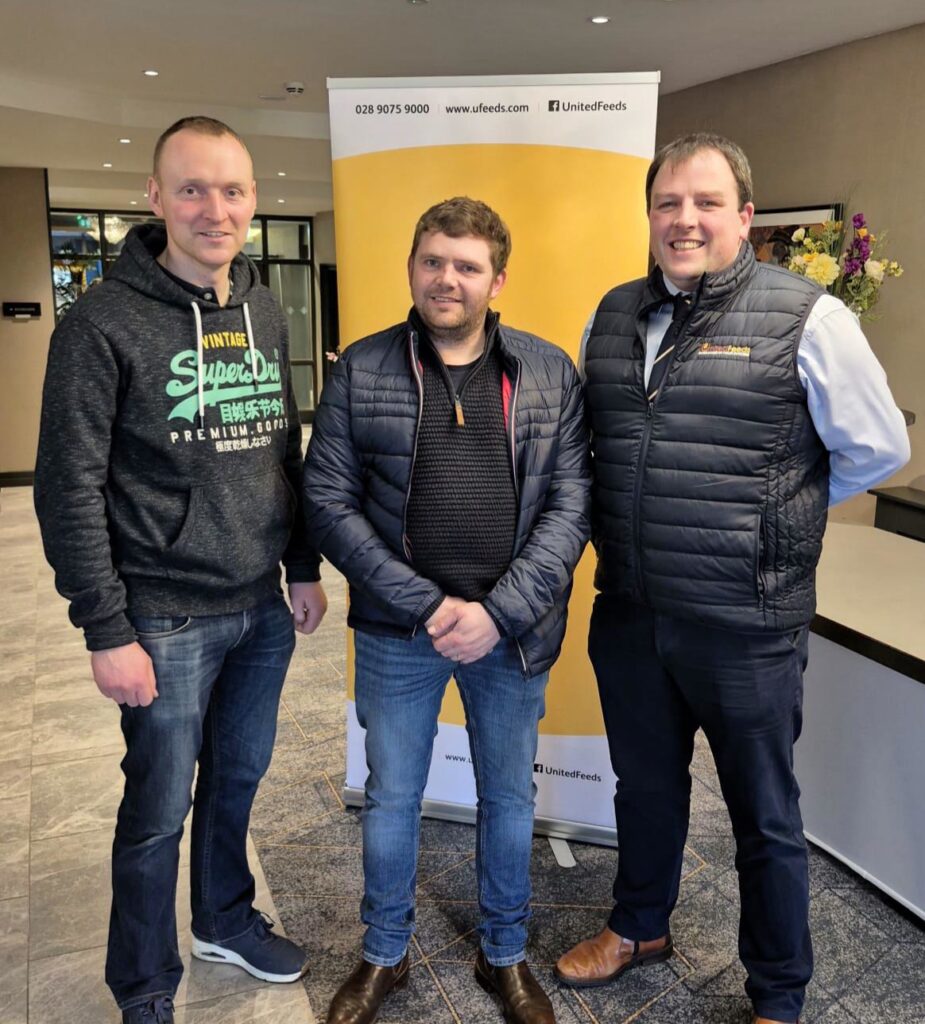
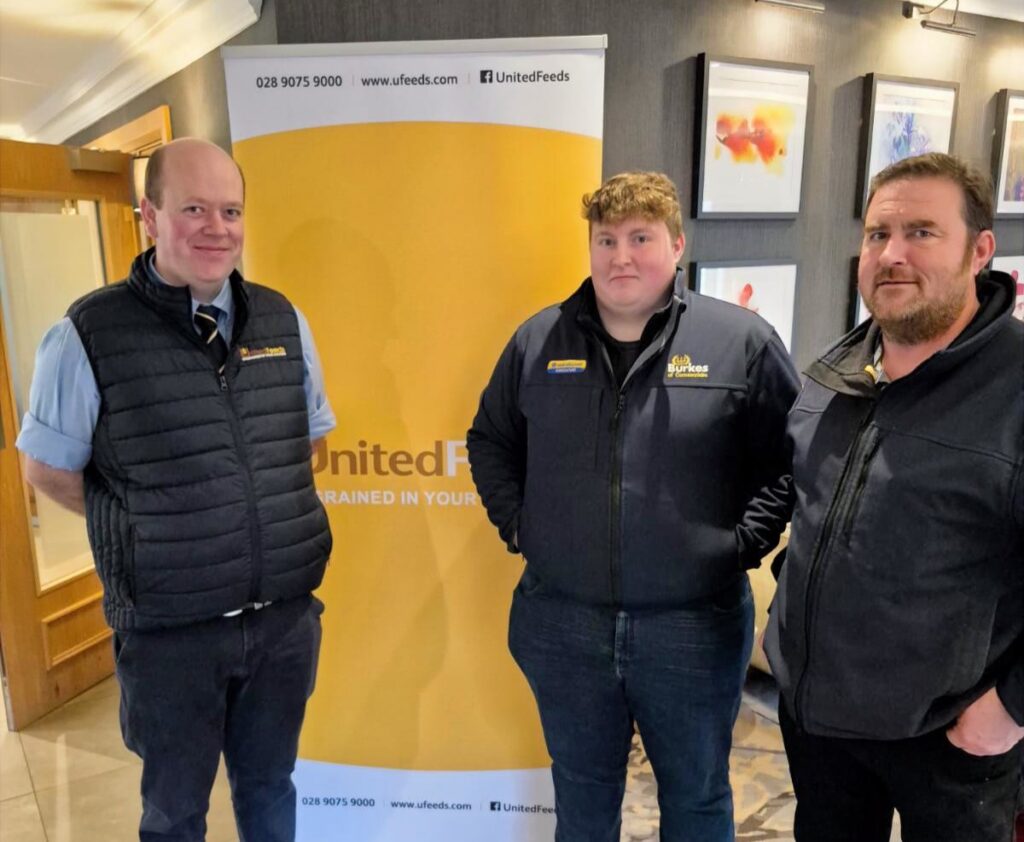
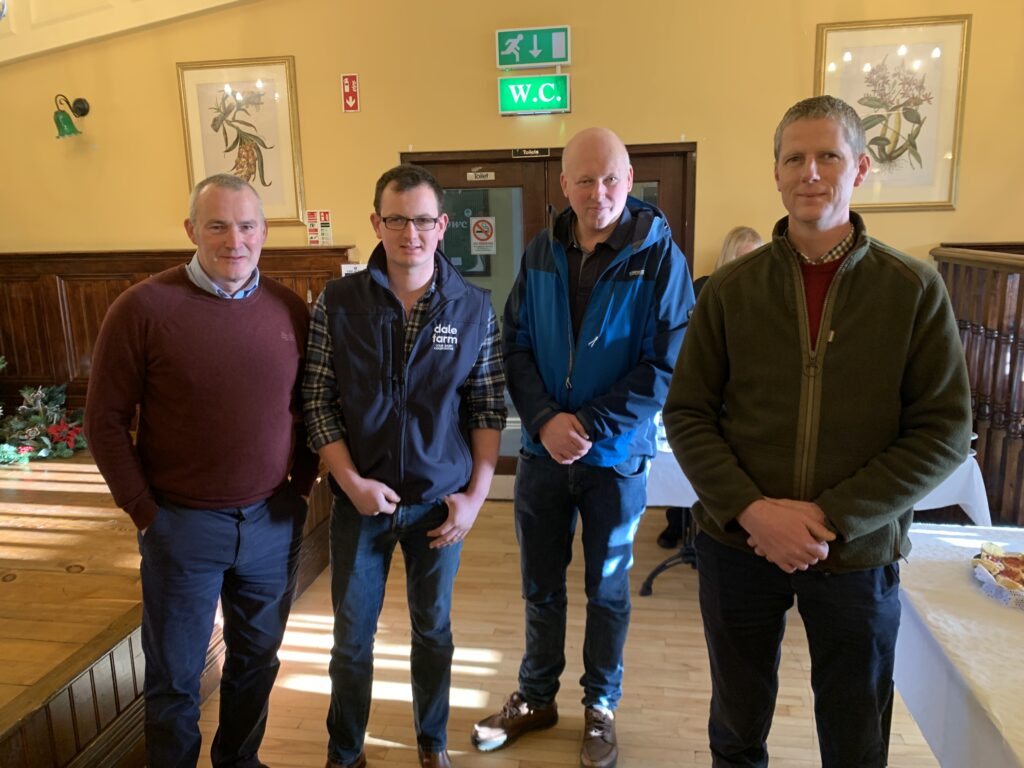
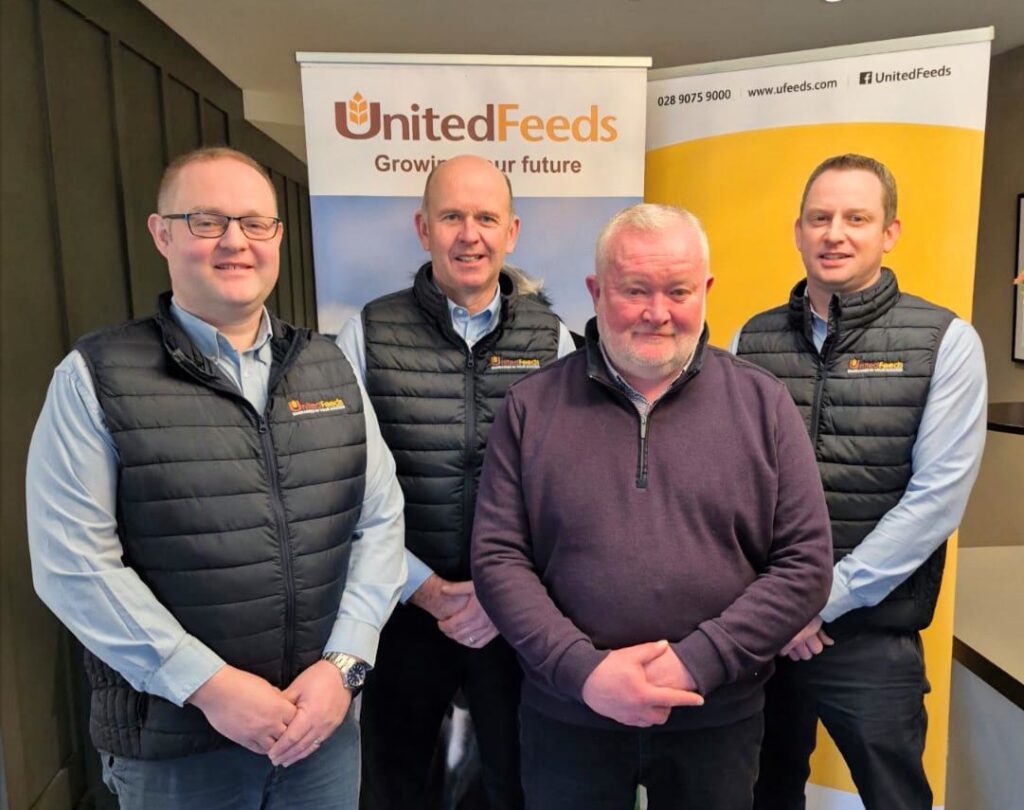
Attending the Ballymoney meeting; Sam Watson, United Feeds with Margaret and Jonathan Gillespie, Portglenone Megan Morrow, United Feeds with Colin Foster, Derrylin, Richard Coalter, Ballinamallard and James Murphy, Tempo at the Enniskillen meeting Bobby Irwin with James and Derek Kettyle, Newtownbutler Clive McVitty and Kyle Leary from Magheraveely with United Feeds’ Sales Director, Alan Boyd David Simpson speaks to Matthew and Trevor Lyster at the meeting in Omagh Martin Clarke with Samuel Rowe, Kilrea, Kenneth Shiels, Maghera and Andrew Wilson, Dungiven Speakers at the United Feeds meeting in Enniskillen, Clive Morrison, Michael Verner and Bobby Irwin, United Feeds and Peter O’Hara, Ulster Bank